Breaking up a concrete patio is a real workout, but it's absolutely a DIY job if you go in with the right tools and a clear plan. For a standard 4-inch residential patio slab, a rented electric jackhammer or rotary hammer with a chisel bit will do most of the heavy lifting. Score the slab into manageable sections with an angle grinder or circular saw fitted with a diamond blade, then knock those sections apart and haul them out. The whole job on an average-sized patio (say, 200 to 400 square feet) typically takes one solid weekend with one or two helpers.
How to Break Up a Concrete Patio: Step-by-Step DIY Guide

Silas Morrison
24 Jun 2026
Assess the patio and plan your approach
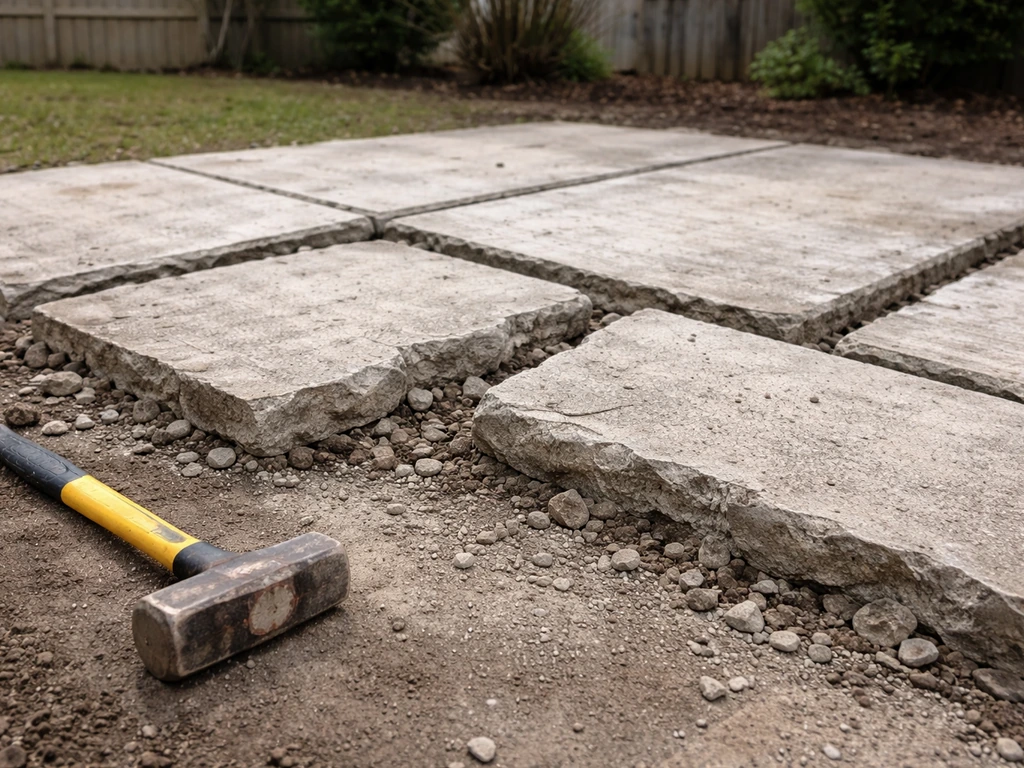
Before you touch a tool, spend 20 minutes walking the patio and answering a few key questions. They'll determine everything from which tools you rent to how long the job takes.
How thick is it? Most residential patios are poured at a minimum of 4 inches, which is the standard required by many local codes across the country. Some older slabs or contractor specials were poured thinner, around 2 to 3 inches, which actually makes demolition easier. If you drilled a hole or can peek at an exposed edge, measure it. Thicker slabs (5 to 6 inches or more) mean more tool time and heavier debris chunks.
Is there rebar in it? Rebar turns a straightforward demo job into a slower, messier one. You can check without cutting by using an inexpensive handheld metal scanner, like the Zircon MetalliScanner MT 6, which detects embedded metal up to about 6 inches deep. If you're dealing with a larger or more complex slab and really need to know what's inside before committing, a professional GPR (ground-penetrating radar) scan can map rebar and wire mesh accurately without touching the concrete. If rebar is present, plan for bolt cutters, an angle grinder with a cut-off wheel, or a reciprocating saw with a metal blade.
What's going underneath it? If you're planning to repour, resurface, or install pavers after removal, you need the subgrade in decent shape. Take note of any drainage patterns and whether the slab sits on compacted gravel or just native soil, because that affects how you'll prep after demo.
How big are the sections you can realistically move? A one-square-foot chunk of 4-inch concrete weighs roughly 50 pounds. Plan your break size around what you and your helpers can lift and toss into a dumpster or wheelbarrow. Aim for pieces no bigger than about 12 by 18 inches if you're hand-loading.
Safety, permits, and site prep
This is the part people skip, and it's where projects go sideways. Don't skip it.
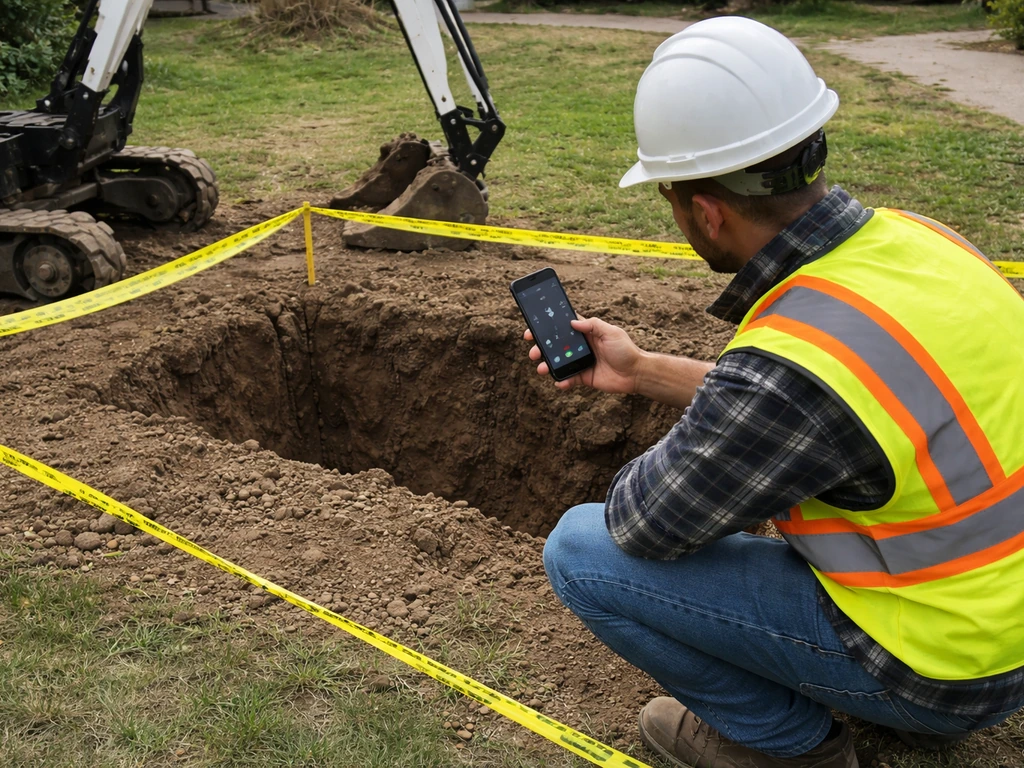
Call 811 before you do anything
Concrete patios often sit directly over or right next to buried utility lines. Call 811 (the national dig-safe line) before any demolition or digging. State rules vary on timing: Washington state requires at least two business days notice before digging, Missouri also requires two working days, and Mississippi requires no less than three working days. Missouri’s excavator notice and ticket requirements are spelled out in the Missouri 811 enforcement guidance, including the two working days’ notice rule and related timing details Missouri also requires two working days. The safest approach is to call a full week before you plan to start. The service is free, and it protects you from cutting a gas line or fiber optic cable.
Check on permits
Many municipalities don't require a permit to demolish an existing patio, but it's worth a quick call to your local building department to confirm. If your patio is attached to the house, connects to a structure, or is being replaced with something new, a permit may be required for the new work even if not for the removal itself.
Personal protective equipment
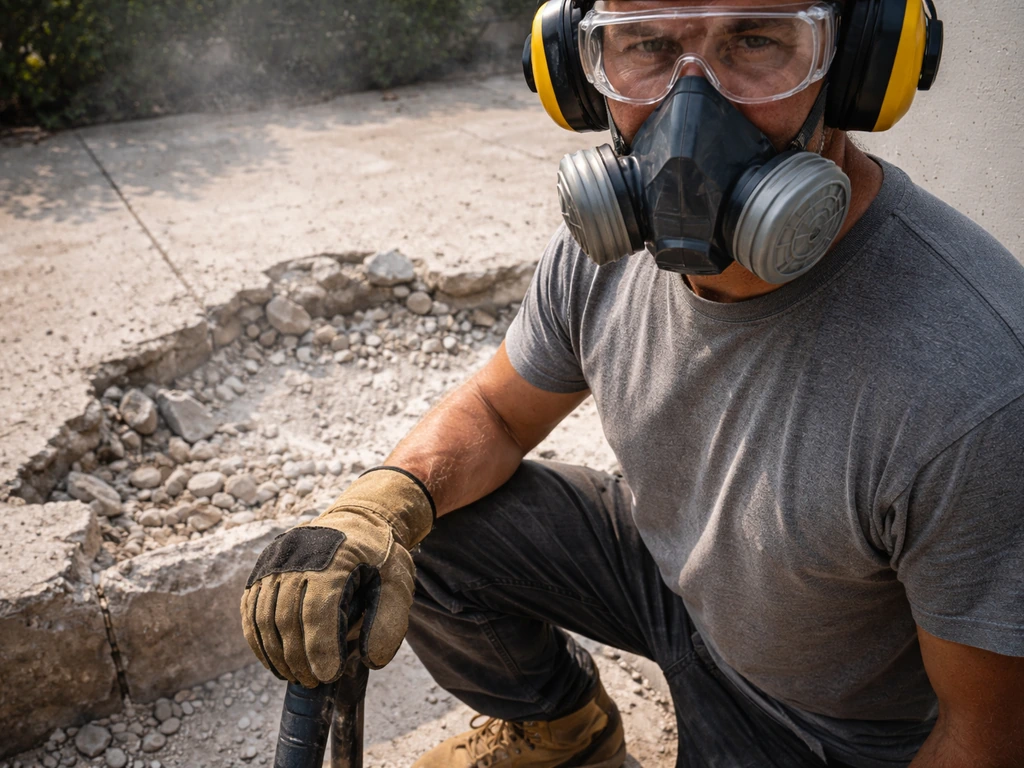
Concrete demolition generates serious hazards: flying chunks, extreme noise, and silica dust. Silica dust is no joke. OSHA's construction silica standard specifically calls out jackhammering as a high-exposure task and requires engineering controls like continuous water delivery at the point of impact or a shrouded vacuum system. For DIYers, this translates to: keep the work wet (spray the slab and tool contact point with water continuously while cutting or chipping), and wear a properly fitted N95 respirator at an absolute minimum, with a P100 half-face respirator being a better choice. Add safety glasses or a face shield, heavy leather gloves, steel-toed boots, and ear protection. Jackhammers routinely hit 100+ decibels, and sustained exposure at that level causes permanent hearing damage.
Site prep
- Clear all furniture, planters, and landscaping from the patio and a 5-foot buffer around it
- Cover any nearby windows, AC units, or exterior finishes with plastic sheeting to protect from flying debris
- Set up a debris landing zone: a rented dumpster positioned as close as possible, or a staging area for wheelbarrow loads
- Wet down the slab and surrounding area before starting to control silica dust from the first strike
- Mark any utility lines that were located and flagged, and leave a clear buffer zone around them
Tools and materials for breaking concrete
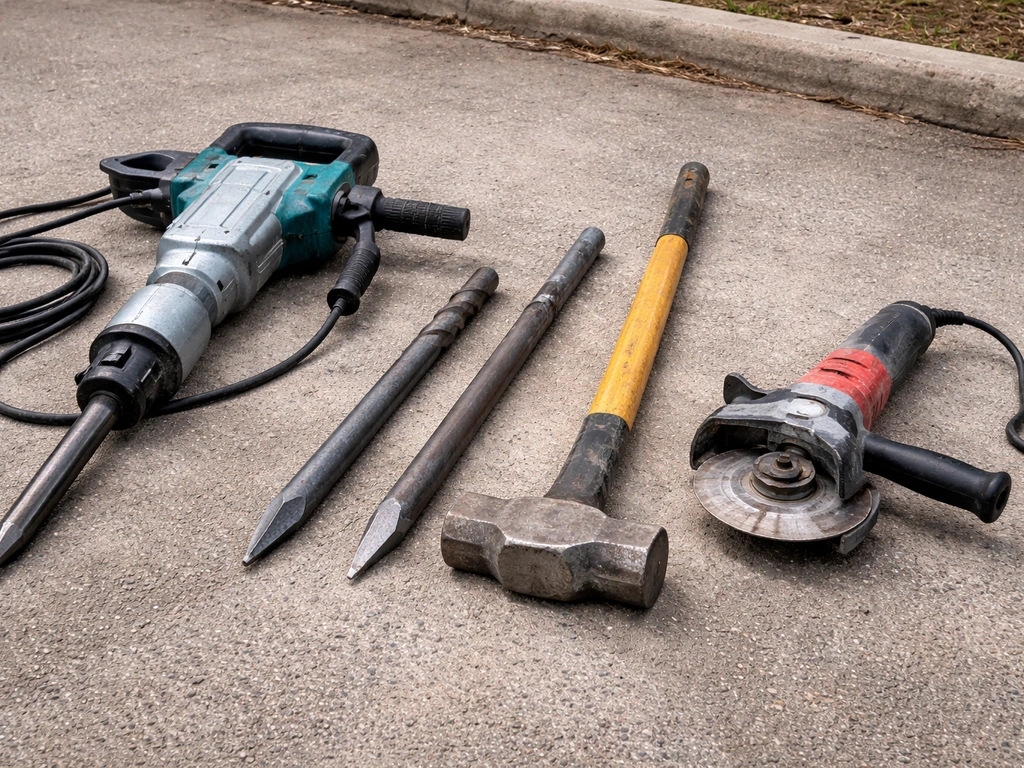
You don't need to own all of this. Tool rental shops carry everything on this list, and renting makes sense for a one-time demo job.
| Tool | Best Used For | Notes |
|---|---|---|
| Electric jackhammer (35–70 lb) | Breaking up large sections of slab | Rent this; buy only if you do lots of demo work |
| Rotary hammer with chisel bit | Smaller patios, tight spaces, finishing breaks | More control than a full jackhammer |
| Circular saw or angle grinder with diamond blade | Scoring/cutting control lines before breaking | Wet cutting reduces silica dust significantly |
| Sledgehammer (10–12 lb) | Knocking apart pre-scored or pre-cracked sections | Works great after scoring; not efficient on its own |
| Pry bar (heavy duty) | Lifting and tilting broken slabs for removal | Essential for getting under pieces |
| Bolt cutters or reciprocating saw with metal blade | Cutting rebar after concrete is broken away | Must-have if rebar is present |
| Wheelbarrow | Moving debris to dumpster or haul pile | Get the largest capacity you can find |
| Garden hose with spray nozzle | Continuous water application for dust control | Keep it running throughout the job |
| N95 or P100 respirator | Protecting lungs from silica dust | Non-negotiable; buy quality, not disposable foam |
| Safety glasses / face shield | Eye protection from flying chips | Face shield preferred for jackhammer work |
| Ear protection (plugs or muffs) | Hearing protection during jackhammer use | Plugs inside muffs give best protection |
Methods: score and break vs. jackhammering vs. splitting
There are three main approaches to breaking up a concrete patio, and in practice the best jobs combine two or three of them. Here's how each works and when to use it.
Score, cut, then break
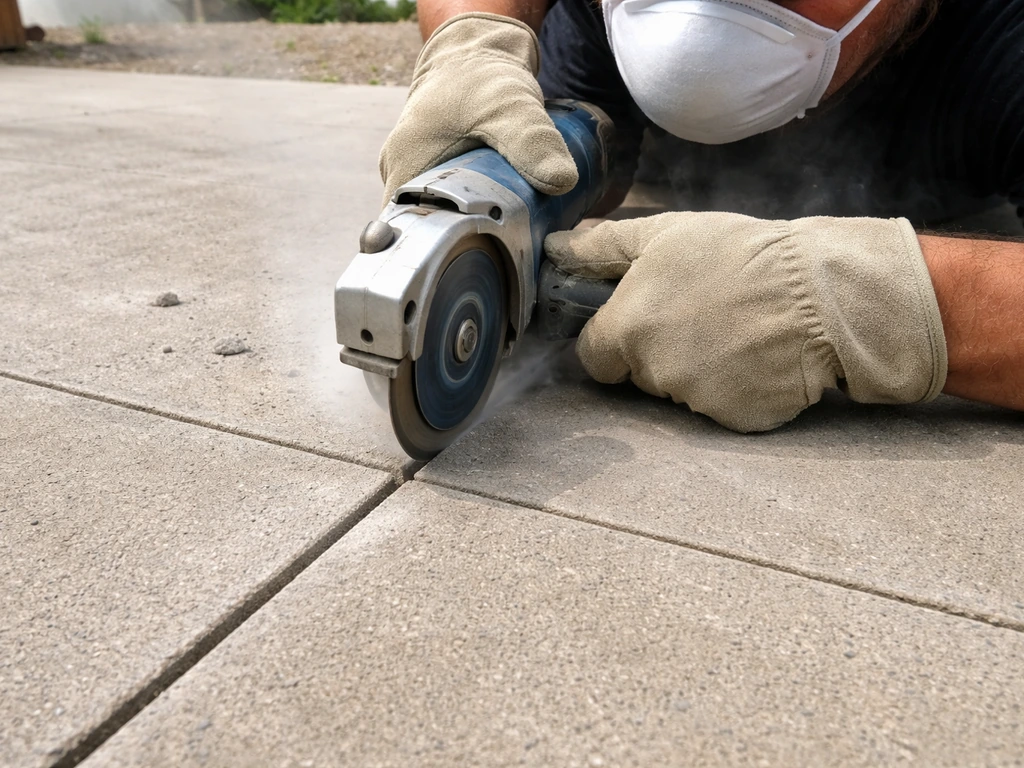
This is the most controlled method and the one I'd recommend starting with. You use a circular saw with a diamond blade (or an angle grinder for shorter cuts) to cut lines into or through the slab, creating a planned grid. Concrete slabs naturally want to crack along the path of least resistance, so when you create those lines you're directing exactly where it breaks. You don't always need to cut all the way through: a cut roughly halfway through the slab (2 inches on a 4-inch slab) is often enough to guide a clean break. After cutting, a sledgehammer or rotary hammer finishes the sections. Wet-cut whenever possible to minimize silica dust. Diamond blades are worth the investment or rental premium since they last far longer than abrasive wheels on concrete.
Jackhammering
For a mid-size to large patio, a rented electric jackhammer (35 to 70 pounds) is the most efficient tool. You work your way across the slab, letting the tool's weight and impact do the work rather than trying to force it down. The key is to start at an edge or a pre-cut line, angle the bit slightly toward the break direction, and let the concrete fracture naturally. A jackhammer is fast but less precise than scoring first, so if you care about not cracking a nearby foundation wall or step, combine jackhammering with pre-cut control lines to keep cracking where you want it. Per OSHA's Table 1, use either continuous water delivery at the point of impact or a vacuum shroud system while running a jackhammer to control silica exposure.
Wedge and feather splitting
This is a lower-noise, lower-vibration method that works especially well near structures you want to protect (like a house foundation or neighboring fence). You drill a series of holes in a line across the slab, then insert wedge-and-feather sets (also called plug and feathers) into the holes and tighten them in sequence with a hammer. The lateral expansion generates high surface pressure that initiates a crack along the drilled line. It's slower than jackhammering but very precise, and the vibration transmitted to nearby structures is dramatically lower. This is a solid choice for thick slabs or heavily reinforced sections where you want controlled fractures.
Which method should you use?
For most homeowners with a standard 4-inch unreinforced or lightly reinforced patio under 400 square feet: start with scoring, then use a rotary hammer or mid-size jackhammer to break sections. For a larger patio or anything over 5 inches thick: rent a full-size 65-pound electric jackhammer and pre-score the slab into a grid first. If the patio is directly against the house foundation or a retaining wall: use wedge splitting along those edges and jackhammer or sledge the middle sections.
Step-by-step demolition workflow
Here's the sequence I use. Follow it in order and you'll avoid the two most common mistakes: random cracking that travels where you don't want it, and creating debris chunks too heavy to move.
- Wet the slab down thoroughly before starting. This reduces silica dust from the first strike.
- Score a grid of cut lines across the entire slab using a diamond blade saw. Space lines roughly 12 to 18 inches apart in both directions to create chunks you can actually lift. Cut at least halfway through the slab on each line.
- Start at an exposed edge or corner, not the middle. Working from an edge gives you a free face to pry against, which makes breaking and lifting far easier. If your patio has existing control joints or cracks, start there.
- Set your jackhammer or rotary hammer at a slight angle toward the nearest cut line. Let the tool do the work; your job is to guide it and keep it positioned.
- Once a section cracks free, use a pry bar to lever it up and tip it onto its side. Breaking it further into smaller pieces on the ground is easier than fighting it flat.
- Load broken pieces continuously into a wheelbarrow and move them to your dumpster or staging pile. Keeping the work area clear makes the job faster and safer.
- Move across the slab methodically, section by section, always working outward from broken edges. Don't jump around randomly.
- Keep spraying water on the work area throughout. Wet debris, wet cut lines, wet everything.
- Once all concrete is removed, use a pry bar and shovel to remove any remaining concrete dust and debris down to the subgrade. Rake and inspect for protruding rebar stubs or wire mesh left behind.
Dealing with rebar, thick slabs, and stubborn sections
Rebar
Once you've broken a reinforced section, you'll often find pieces still wired together by the embedded rebar. Don't try to yank them apart by brute force; you'll hurt yourself. Instead, use bolt cutters to cut the exposed rebar between sections, or use a reciprocating saw or angle grinder with a metal cut-off wheel to cut through thicker bars. Work from the top down: break the concrete away from the rebar as much as possible first, then cut the now-exposed bars. Rebar and wire mesh can be separated from concrete chunks and recycled as scrap metal at many facilities. Under Kansas KDHE guidance (and similar definitions in other states), concrete rubble including embedded reinforcing steel qualifies as clean rubble for disposal purposes as long as there's no hazardous contamination.
Thick slabs (5 inches and up)
Thicker slabs require more impact energy to fracture and produce much heavier chunks. If your slab is 5 to 6 inches thick, upgrade to a 65-pound or heavier jackhammer if you've been renting smaller. Pre-scoring becomes even more important at this thickness because the slab won't break as predictably without those guide lines. Consider cutting all the way through (full-depth cuts) rather than halfway, especially near edges and around any structures. Also plan on smaller break grid spacing, maybe 10 by 12 inches per piece, since the chunk weight per square foot increases significantly.
Stubborn sections that won't break
Sometimes you'll hit a section that just refuses to crack along your score line. This usually means either the cut didn't go deep enough, there's a dense aggregate concentration, or there's wire mesh holding it together below. First, deepen your cut. If that doesn't work, drill a series of holes along the score line and either insert wedges or use the holes as jackhammer starting points. Existing cracks in the slab are actually your best friend here: always work toward existing cracks rather than away from them.
Cleanup, disposal, and prepping for the next project
Handling debris safely
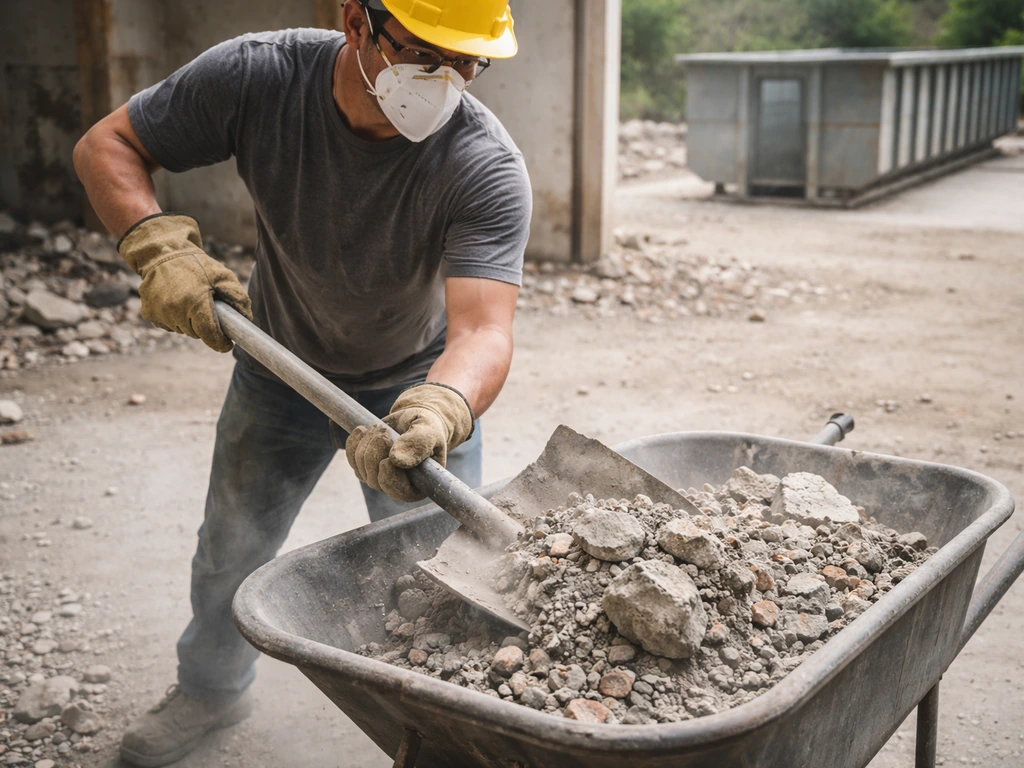
Concrete demolition generates a lot of fine silica-containing dust even after the heavy breaking is done. OSHA guidance is clear on this: don't dry sweep or dry brush concrete dust. Use wet methods to clean up (wet mopping, wet raking) or a HEPA-filtered vacuum. Keep your respirator on during cleanup, not just during the breaking phase.
Disposal options
Concrete is heavy and regulated differently than regular household trash. Your options depend on how much you have and your local rules. King County’s C&D materials guidance explains local expectations for separating and handling construction and demolition debris and outlines disposal and transfer-station rules for these materials.
- Rent a roll-off dumpster: the most convenient option for most homeowners; confirm with the rental company that they accept concrete/masonry, since some have weight limits per load
- Haul it yourself to a C&D (construction and demolition) debris facility or transfer station: call ahead because facilities like King County, WA's transfer stations have specific separation requirements for concrete vs. mixed C&D waste
- Concrete recycling: many areas have dedicated concrete recycling yards that accept broken concrete (sometimes called clean rubble) at low or no cost, and some will even pick it up
- Curb pickup: some municipalities allow small amounts of concrete debris at the curb if broken into small pieces and bagged; check local rules first
- Give it away: broken concrete slabs posted on Craigslist or Facebook Marketplace under 'free materials' often disappear quickly, especially if someone needs fill or stepping stone material
Reusing broken concrete
Before you haul all of it away, consider whether any of it has a second life on your property. Broken concrete slabs work surprisingly well as informal stepping stones, garden edging, dry-stack retaining walls, or fill for low spots. This is sometimes called 'urbanite' in landscape design circles. If you're thinking about what to do with broken concrete patio pieces, setting them into a new informal pathway or using them as fill is a legitimate option that saves disposal costs and materials.
Prepping the subgrade for what's next
Once all concrete and debris are cleared, take a good look at the subgrade. If you're planning to pour a new patio, resurface, or install pavers, the condition of what's underneath matters a lot. If your patio is cracked or damaged, this is the part where you plan what to do after removal, including disposal and rebuilding options what to do with broken concrete patio. Remove any remaining concrete dust, loose soil, and rebar stubs. Check for soft or wet spots in the soil (signs of drainage issues) and address those before pouring or building. Compact the subgrade with a plate compactor if needed, and add or re-grade a gravel base if the original one was disturbed. Getting this step right is what separates a patio that lasts from one that cracks again in two years.
Whether you're resurfacing, laying new concrete, or exploring what to do with the space after a full tear-up, the work you put into a clean, well-prepped subgrade pays off in every project that follows. If you want to tear up a concrete patio yourself, start by planning the safest demolition method and renting the right tools before you break a single section tear up a patio. You've done the hardest part. The rest is straightforward from here.
FAQ
Can I break up the patio without a jackhammer, using only hand tools?
Yes, but only if you can connect the saw or grinder to a proper wet setup or dust control. A dry angle-grinder cut can kick up high amounts of silica dust from the cut line, and dry sweeping after the fact will spread dust again. Plan on continuous wetting at the blade contact point, or use a shrouded vacuum system paired with the grinder, then handle remaining dust cleanup with a wet method or HEPA vacuum.
What should I do if the slab won’t crack along my cut lines?
Avoid full-power “chasing” with a sledgehammer. Start by making sure your control cuts are deep enough, then use the jackhammer or rotary hammer to open the line rather than hammering random spots. If you hit stubborn areas, deepen the score and, if needed, drill a row of holes along the line and use wedges or the holes as controlled initiation points.
Do I need to measure slab thickness everywhere, or is one measurement enough?
Check the slab thickness at multiple locations, not just once. Concrete can vary across a patio, especially near edges, steps, or where it was patched. If you measured only one spot and the rest is thicker or more reinforced, your break size and tool rental may be too small, leading to stuck chunks and longer labor.
How do I protect the house foundation or nearby walls when breaking the patio?
If the patio is attached to the house foundation, the biggest risk is uncontrolled cracking into the foundation or forcing vibration into the structure. Use wedge splitting along edges or where you need a clean separation, and combine that with scoring plus jackhammering only in the middle sections. Consider pausing to adjust your plan if you see cracking traveling toward the structure as you work.
What’s the safest way to handle reinforced slabs with rebar or wire mesh?
If you find rebar or wire mesh that’s still connecting pieces, don’t pry or yank with force. Cut exposed steel between sections once you’ve broken concrete away from it, using bolt cutters for thinner rebar or a reciprocating saw or angle grinder with a metal blade for thicker bars. Working top down helps expose the steel sooner and reduces how much you have to manhandle.
What if I suspect there are utilities or wiring under the patio even after calling 811?
If you see unusual wiring, capped lines, or you can’t confirm what’s under the slab, treat it like a utility hazard. The best step is to call 811 before demolition, and if the locate report is unclear or you suspect something non-standard (like low-voltage landscape wiring), expose a small test area carefully with non-destructive tools first before committing to full demolition.
Can I haul broken concrete to a regular landfill or dump, or does it need special sorting?
For disposal, the key is that “concrete rubble” rules can depend on whether it’s mixed with soil, treated wood, drywall, or other contaminants. If your local facility requires sorting, keep rebar separate if possible and avoid dumping it with household trash or mixed demolition debris. When in doubt, ask the receiving yard what they consider acceptable “clean concrete rubble” versus contaminated loads.
What’s a realistic chunk size for loading into a dumpster without getting hurt?
Plan around what you can safely load. Even at 4 inches thick, chunks can be heavy and awkward, and injuries commonly happen during loading and tossing. Use the smallest grid size that still breaks cleanly, and consider setting a drop area near the dumpster so you can move pieces without lifting over shoulder height.
When is it worth reusing broken concrete on the property, and when should I dispose of it?
Sometimes you can reuse broken concrete as base material or landscape features, but only if it’s clean and not mixed with soil or demolition waste. Don’t use heavily contaminated pieces, and if you want to use it as fill, compact it in lifts and keep an eye on drainage patterns so it doesn’t create new soft spots or uneven settling.
How should I clean up after I’m done breaking the slab, especially to protect indoor air?
Use HEPA-filtered vacuum or wet cleanup, and keep silica dust out of living areas by sealing doorways and using plastic containment if you’re working near the house. Also wear your respirator during cleanup, not just while breaking. Dry sweeping or dry brushing can re-aerosolize fine dust even after the slab is down.