
The most reliable way to anchor patio furniture to concrete is with concrete screw anchors (like Tapcons) or wedge expansion anchors drilled directly into the slab, paired with outdoor-rated stainless steel or hot-dipped galvanized hardware. For furniture you don't want to permanently fix, heavy ballast weights or furniture foot straps secured to a weighted base are the best no-drill alternative. Which one you need depends on your furniture type, how often you move it, and whether your slab is in good enough shape to drill into.
How to Anchor Patio Furniture to Concrete Safely

Silas Morrison
10 Jul 2026
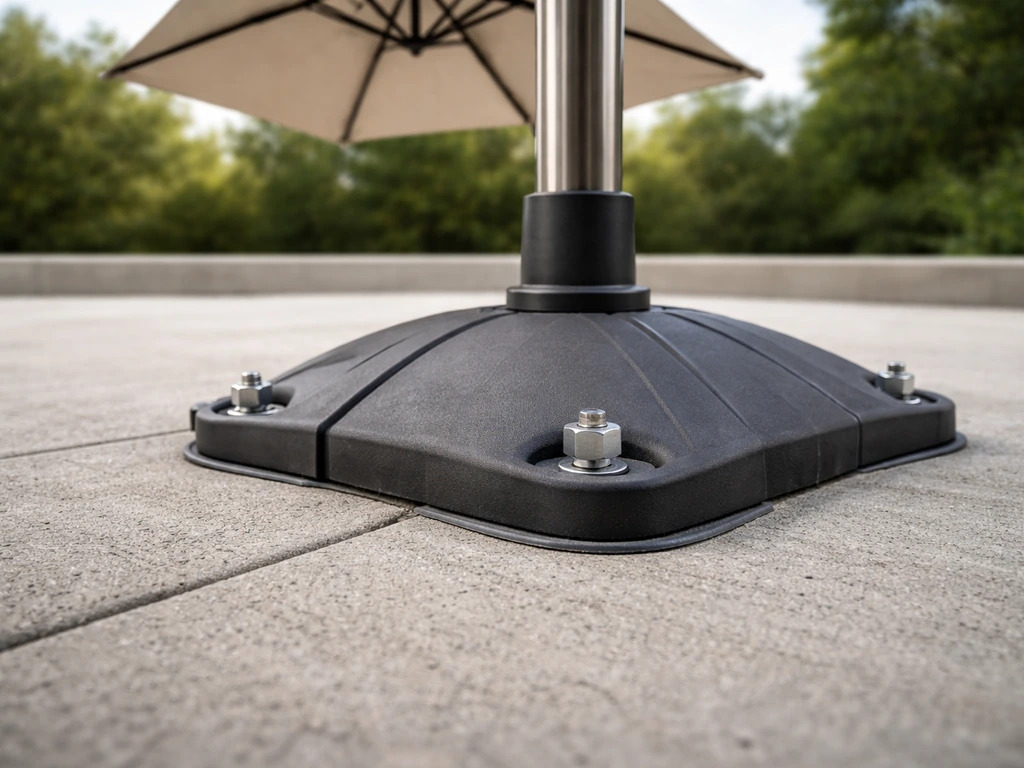
Why anchoring patio furniture to concrete actually matters
A 40 mph wind gust, which is completely normal during a summer thunderstorm, can send an unanchored patio umbrella airborne like a javelin. The U.S. Consumer Product Safety Commission has dedicated safety campaigns specifically around furniture tip-over and wind-borne furniture accidents because the injuries are real and serious. We're not just talking about scratched concrete or a dented chair. Umbrellas, tables, and chairs that tip or fly become projectiles, and they damage windows, fences, neighboring property, and people.
Beyond storms, there's the daily annoyance factor: furniture that slides across an uncoated or slightly sloped slab, chairs that creep away from the table every time someone sits down, and umbrella bases that tip whenever a breeze picks up. Anchoring solves all of it. The goal, as the CPSC frames it, is preventing full tip-over, not just light restraint. A strap or anchor that lets a piece of furniture wobble 6 inches before stopping isn't doing the job.
Choose the right anchoring method before you buy anything
There are two main approaches: drilling into the concrete (permanent or semi-permanent anchoring), and surface-level or non-drill options (weights, straps, and furniture feet). Within the drill-in category, you have two sub-types: mechanical anchors (concrete screws and wedge/expansion anchors) and adhesive/chemical anchors. Each has a place depending on what you're anchoring and how your slab looks.
Mechanical concrete anchors: the go-to for most furniture
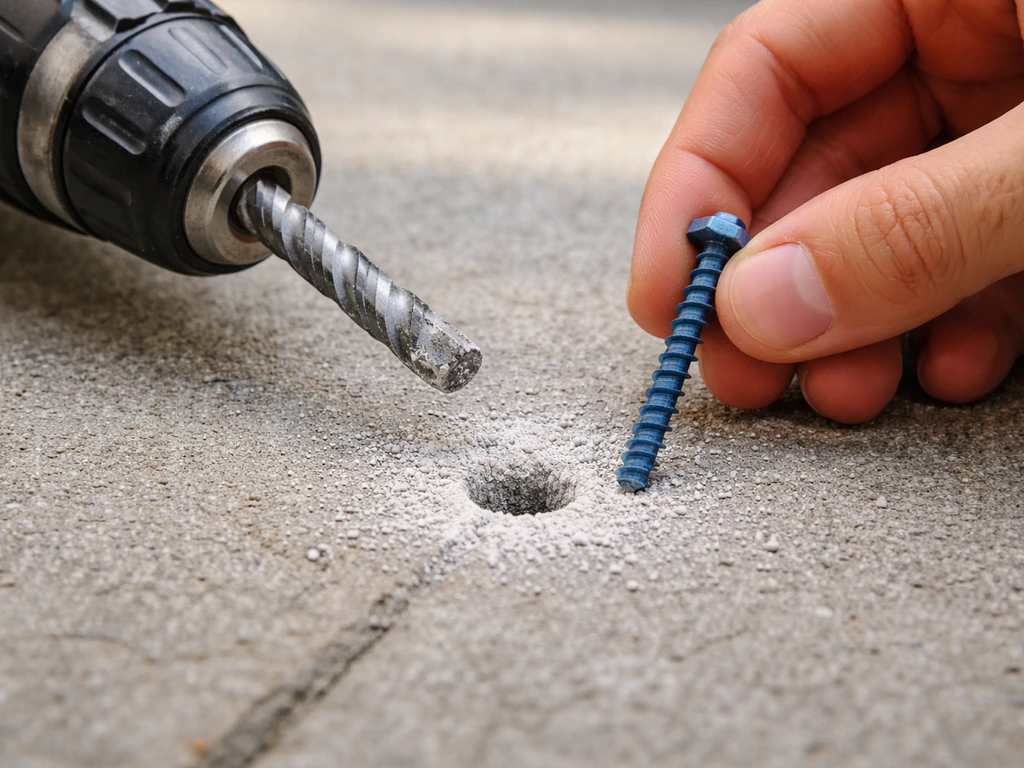
Concrete screw anchors like Tapcon are the easiest to work with for patio furniture. You drill a pilot hole with a hammer drill and carbide-tipped masonry bit, blow it clean, and drive the screw directly into the concrete. They're removable, they hold well in both tension and shear, and Tapcon's Climaseal-coated versions are rated for outdoor exposure. This same approach works when you need to attach railing to a concrete patio with secure, code-appropriate anchors attach railing to concrete patio. Wedge expansion anchors (the style where you hammer a sleeve into the hole and tighten a nut to expand it) are stronger but need more edge distance from the slab edge and more horizontal spacing between anchors. On smaller patios or near seating walls, that extra geometry requirement matters. For most patio chairs, tables, and umbrella brackets, a 3/16" or 1/4" diameter concrete screw anchor at 1.5" to 2" embedment depth is plenty.
Adhesive/chemical anchors: for high-load or cracked concrete
If you're anchoring something heavy like a pergola post bracket or a large umbrella pole base that will see serious wind uplift, a two-part adhesive anchor system (like Simpson Strong-Tie's or Hilti's HIT-RE 500 V3) gives you more load capacity and works better in cracked concrete. The installation process is more involved: you drill the hole, then clean it in a specific sequence (blow, brush, blow again with oil-free compressed air) before injecting the adhesive and setting the threaded rod. Skipping or rushing the cleaning steps is the number one cause of adhesive anchor failures, so this method is not more forgiving than mechanical anchors, it's actually more demanding.
Non-drill options: weights, ballast, and furniture feet
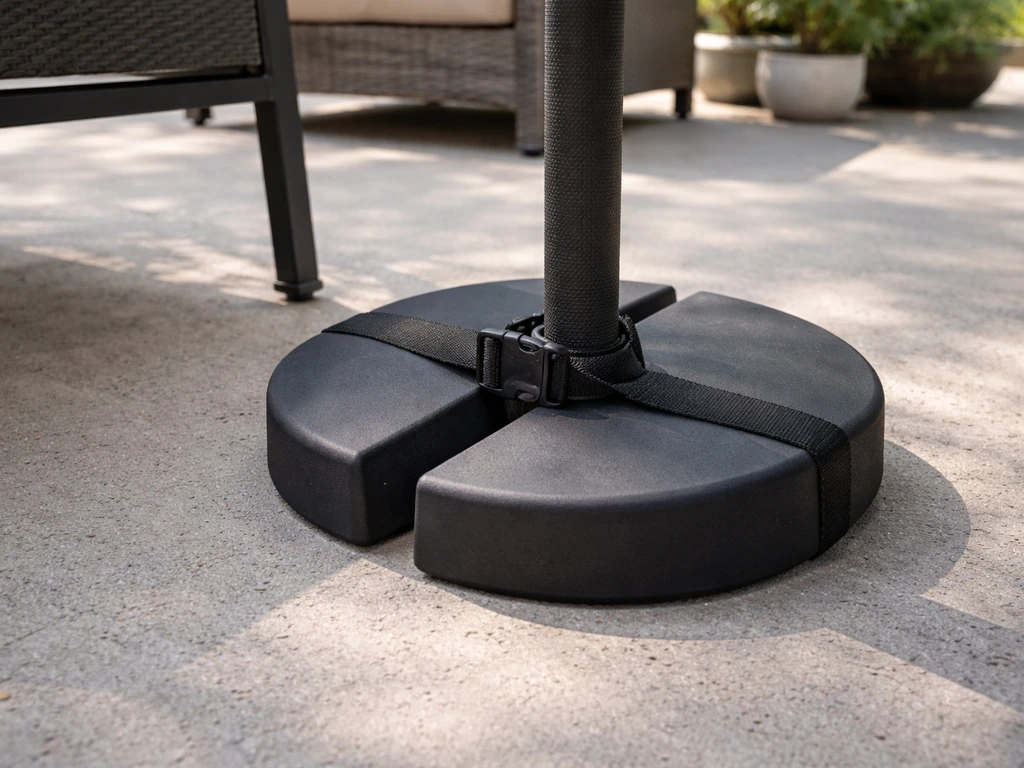
If you rent, have a sealed or stamped concrete patio you don't want to penetrate, or just want flexibility to rearrange furniture seasonally, non-drill options are legitimate. Weighted umbrella bases (50 lbs and up for larger canopies), sandbag ballast weights over furniture feet, and anti-slip rubber furniture feet pads all reduce sliding and tip risk. A similar approach, like using rug grippers or anti-slip pads designed for concrete, can keep a patio rug from shifting. The CPSC acknowledges no-drill anchoring strategies as a valid injury-prevention approach. The honest caveat: none of these hold in a serious wind event the way a bolted anchor does. If you live somewhere with frequent high-wind storms, weights are a supplement to closing your umbrella canopy early, not a full replacement for hardware anchoring.
| Method | Best For | Removable? | Drill Required? | Wind Resistance |
|---|---|---|---|---|
| Concrete screw anchor (Tapcon) | Chairs, tables, umbrella brackets | Yes (leave hole) | Yes | High |
| Wedge expansion anchor | Heavy furniture, post bases | No (cut flush) | Yes | Very High |
| Adhesive/chemical anchor | Pergola posts, high-load brackets | No | Yes | Very High |
| Weighted base/ballast | Umbrellas, planters, occasional use | Yes | No | Moderate |
| Anti-slip rubber feet/pads | Chairs, light tables | Yes | No | Low |
What to buy: materials and tools for each method
For concrete screw anchors (Tapcon-style)
- Tapcon concrete screws: 3/16" diameter for light furniture, 1/4" for tables and umbrella brackets (get the Climaseal-coated hex-head version for outdoor use)
- Carbide-tipped hammer drill bit: 5/32" bit for 3/16" Tapcons, 3/16" bit for 1/4" Tapcons (the bit size is always slightly smaller than the screw diameter)
- Hammer drill (not a standard drill): a basic 5-amp corded hammer drill works; rotary-only drills won't cut it in concrete
- Depth stop or masking tape on the bit to mark drilling depth
- Compressed air blow gun and can or oil-free compressor to clean the hole
- Wire brush sized for the hole diameter
- Torque wrench or impact driver set to low torque (over-driving strips the threads)
- Stainless steel washers and outdoor-rated flat washers to spread load under the screw head
- Concrete sealant or paintable exterior caulk to seal the hole perimeter after installation
For wedge expansion anchors
- Stainless steel or hot-dipped galvanized wedge anchors in the correct diameter (1/4" to 1/2" depending on load)
- Matching carbide hammer drill bit (same diameter as the anchor body)
- Hammer drill and a standard hammer for setting the anchor
- Wire brush and compressed air for hole cleaning
- Torque wrench: wedge anchors have published installation torque values; hitting those numbers matters for expansion
For non-drill / ballast setups
- Umbrella base: 50 lbs minimum for a 9-foot canopy, heavier for larger canopies or windier climates
- Sandbag ballast weights (the saddle-bag style draped over furniture feet work well)
- Thick rubber furniture foot pads (at least 1/4" thick, non-slip surface on both sides)
- Furniture straps or tie-down straps to connect pieces together for combined weight
Step-by-step: anchoring patio furniture with concrete anchors
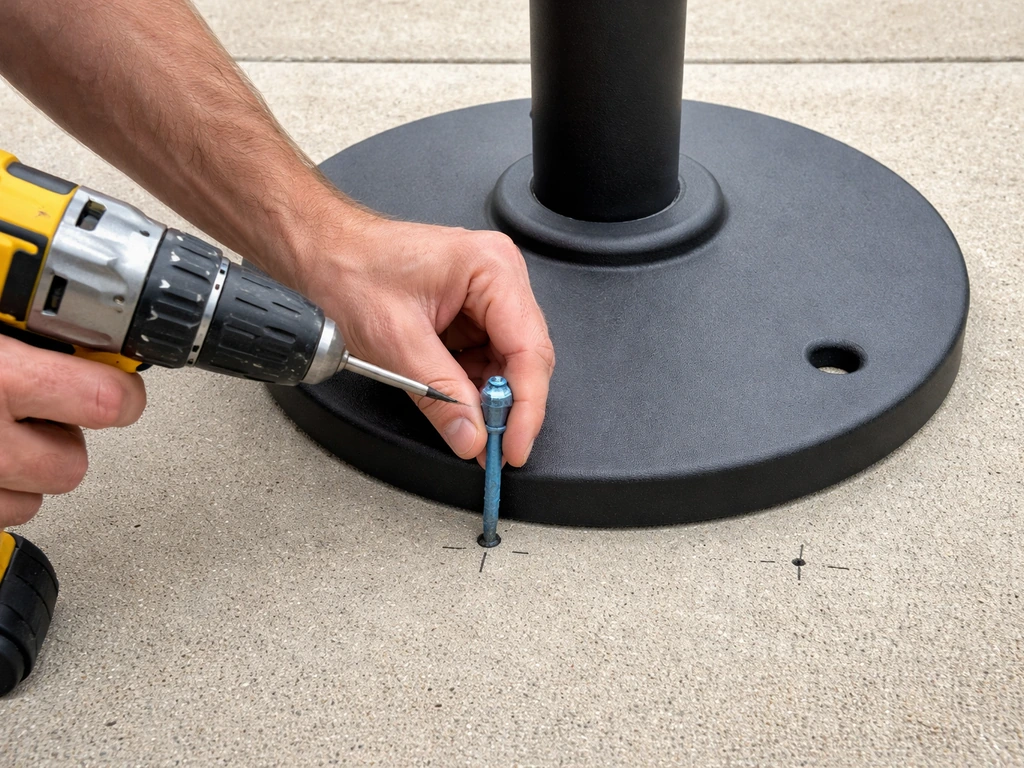
This process covers concrete screw anchors, which is what I'd use for the majority of patio furniture anchoring jobs. For a patio furniture setup, the same basic approach is used when you attach wood to a concrete patio with concrete anchors and weatherproof sealing concrete screw anchors. Wedge anchors follow the same basic sequence but require additional hole-depth precision and a hammer to set the sleeve before torquing.
- Mark your anchor hole locations. Position the furniture piece exactly where you want it. Use a marker or pencil through the mounting holes in the base/foot to transfer the locations onto the concrete. If the furniture doesn't have pre-drilled mounting holes, you'll need to add a base plate or mounting bracket with holes first.
- Check the hole locations for problems. Don't drill within 2 inches of a visible crack, a control joint, or the edge of the slab. Drilling too close to the edge causes the concrete to spall or split. For 1/4" anchors, stay at least 2.5" to 3" from any slab edge (check the ICC-ES edge distance specs for your specific anchor product). Move furniture placement if needed.
- Set your drill depth. Tapcon screws need a hole depth equal to the embedment length plus about 1/2" extra for debris. For a 1-3/4" embedment, drill to 2-1/4" depth. Wrap tape around your bit or use a depth stop collar to mark the target depth.
- Drill the pilot hole. Use your hammer drill on hammer-drill mode (not rotation-only). Hold the drill perpendicular to the slab surface. Use steady, moderate pressure and let the hammering action do the work. Don't force it. The hole should take 10 to 30 seconds in normal concrete.
- Clean the hole thoroughly. This step is skipped way too often and it causes anchors to walk or fail. Blow the hole out with compressed air first, then scrub with a wire brush the full depth of the hole, then blow again. A DEWALT compressed air blow gun works well here. For adhesive anchors, the sequence is strictly: blow, brush, blow, and must use oil-free compressed air.
- Insert the anchor. For Tapcon screws, place your bracket/furniture foot over the hole and drive the screw through the hardware directly into the hole using a drill or wrench. Drive it until the head is snug against the washer and bracket, but stop there. Over-torquing strips the threads in the concrete. For wedge anchors, insert the anchor into the hole, tap with a hammer until the clip is below the surface, place your hardware, and torque the nut to the manufacturer's specification with a torque wrench.
- Seal the perimeter. After installation, run a bead of paintable exterior caulk or concrete sealant around the base of each anchor point where the hardware meets the concrete. This keeps water from wicking into the hole and freezing/thawing around the anchor.
A few common mistakes to avoid: driving Tapcons with a high-torque impact driver at full power (it strips the concrete threads fast), drilling into a crack thinking it won't matter (it does, the crack propagates), and using zinc-plated indoor anchors instead of stainless steel or coated outdoor hardware (they'll rust and stain your concrete within one season).
Step-by-step: non-drill anchoring with weights and ballast
This approach works best for umbrellas, light chairs, and situations where drilling isn't an option. If you want to anchor patio furniture into concrete, the key is choosing the right method and placing the anchors far enough from edges and cracks. It won't replace hardware anchoring for serious wind events, but it meaningfully reduces sliding and tip risk in everyday conditions.
- Choose the right base weight for your umbrella. A 9-foot market umbrella needs at least 50 lbs of base weight on a calm day. In any area with regular wind above 20 mph, use 75 lbs or more. Fill-style bases that you add sand or water to are convenient but make sure you actually fill them to capacity.
- Position the base so the pole is vertical and centered. A tilted umbrella catches more wind load and increases tip risk significantly.
- Add saddle-bag ballast weights over furniture feet or base arms. These are sold as umbrella base weights or exercise weights and loop directly over the base arms, adding 10 to 20 lbs per bag. Stack as many as you need.
- Apply anti-slip rubber furniture pads under all chair and table feet. Cut pads to match the foot shape if needed. On smooth sealed concrete, these pads make a noticeable difference in slide resistance.
- For chairs and tables, connect pieces together using furniture tie-down straps or bungee cord anchors if a storm is coming. A grouped set of furniture acts as one heavier unit and is less likely to tip than individual pieces.
- Close umbrella canopies when wind picks up. No base weight fully compensates for an open canopy in high wind. The general threshold used in umbrella safety guidance is closing the canopy at sustained winds above 20 to 25 mph. Treat it like a rule, not a suggestion.
Placement, spacing, and protecting your concrete slab
Where you put anchor holes matters almost as much as how you install them. Concrete has geometric limits on how close anchors can be to edges and to each other before the capacity drops significantly. blank" rel="noopener noreferrer">ICC-ES reports for anchor products define minimum edge distances and spacing values by anchor diameter. As a practical rule: keep any anchor at least 6 times the anchor diameter from the nearest slab edge, and space multiple anchors at least 6 times the anchor diameter apart from each other. For a 1/4" anchor, that's 1.5" minimum from edges and between anchors. That's a minimum, not an ideal; more distance is always better.
Avoid drilling near control joints (the intentional saw cuts in the slab). These joints exist to manage cracking, and drilling through or right next to them undermines that function and can cause spalling. If your furniture placement puts a mounting point right over a control joint, offset the furniture a few inches or use a surface-mounted furniture pad instead.
On sealed or coated concrete, drilling will break through the sealer coating at the hole location. That's unavoidable, but you can minimize the damage by using a sharp, new carbide bit and drilling at steady pressure without wandering. After installation, sealing the hole perimeter with exterior caulk (as described above) closes the penetration. If you ever remove the anchor, fill the abandoned hole with concrete patching compound and re-seal the surface.
For furniture arrangement, think about grouping heavier pieces (tables, planters) toward the interior of the patio where they're buffered from wind by the house or a fence. Umbrellas and lightweight chairs at the open perimeter are the highest tip-risk items and benefit most from anchoring or ballast. If you're also thinking about attaching structural elements like a pergola or post to your slab, the approach overlaps with anchoring patio furniture but involves much higher load requirements and larger hardware.
Weatherproofing, corrosion protection, and keeping anchors solid long-term
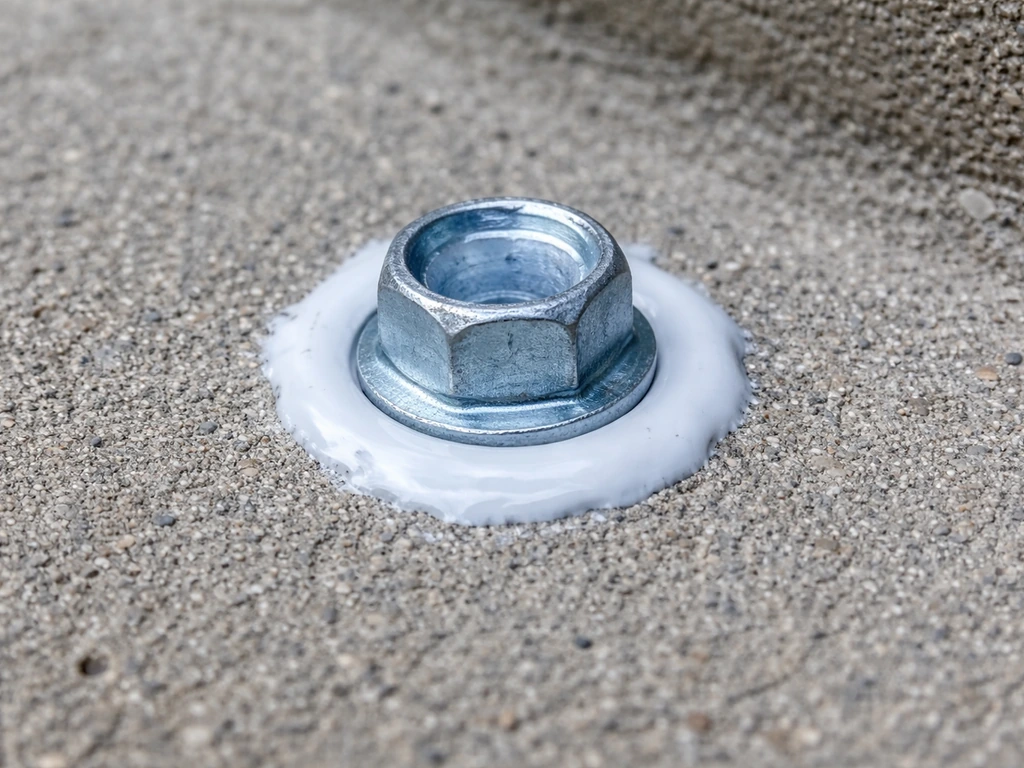
Outdoor concrete anchors fail in two ways: mechanical loosening over time, and corrosion that compromises the hardware. Both are preventable with the right setup from the start.
Use the right hardware from day one
For anything exposed to rain and freeze-thaw cycles, use 304 or 316 stainless steel anchors, screws, and washers, or hot-dipped galvanized hardware as a minimum. Tapcon's Climaseal-coated concrete screws are specifically designed for outdoor exposure. Standard zinc-plated hardware will rust within a season or two, staining your concrete with orange streaks and eventually losing holding strength as corrosion eats the anchor body. It's not a cost-saving move to use indoor hardware outdoors.
Seal every penetration
Water gets into unsealed anchor holes, expands when it freezes, and slowly cracks the concrete around the anchor. After installing each anchor, run a small bead of paintable exterior caulk or a concrete-compatible sealant around the base of the hardware where it meets the slab. Smooth it with a wet finger and let it cure. This takes about 5 minutes per anchor point and significantly extends the life of both the anchor and the surrounding concrete.
Annual check-in and maintenance
Once a year (spring is a good time), do a quick check on every anchored furniture piece. Try to wiggle each anchored point by hand. If there's noticeable movement, the anchor may have loosened or the concrete may have cracked around it. For concrete screw anchors, you can try snugging them slightly. For wedge anchors, note that Simpson Strong-Tie specifically advises against re-torquing wedge anchors back to initial installation torque, so if a wedge anchor has noticeably loosened, the right call is to replace it with a new anchor in a slightly offset hole. Simpson Strong-Tie’s supplemental anchor notes also state that re-torquing anchors back to initial installation torque is not recommended or necessary re-torquing wedge anchors back to initial installation torque. Check the caulk seal at each hole and reapply if it has cracked or pulled away.
Also keep an eye on the concrete itself. If your slab develops new cracks near anchor points, that's a signal the anchor may be overloaded or improperly placed. Remove the hardware, fill the crack with a flexible polyurethane concrete crack filler, let it cure fully, and redrill in a new location that meets edge-distance requirements. Keeping your slab sealed overall (with a penetrating concrete sealer refreshed every 2 to 3 years) reduces water intrusion and slows the deterioration of the concrete around anchor holes.
Seasonal removal and storage
If you use concrete screw anchors and want to bring furniture inside for winter, you can remove the Tapcon screws and set the furniture aside. The holes in the concrete will remain. Before winter, fill them with exterior caulk or a small concrete plug to keep water out. In spring, clean the holes out and reinstall. They'll hold well for several seasons of reinstallation as long as you're not stripping the threads during removal and reinstall cycles. Wedge anchors are not designed for this kind of seasonal cycling, as the expansion sleeve deforms permanently during installation.
FAQ
Can I anchor patio furniture directly into concrete that has a coating, paint, or sealer on it?
Yes, but plan on the bit cutting through the surface layer where the hole goes. After drilling, keep drilling pressure steady so you do not “wander” off the marked spot, then seal the hole perimeter when you finish. If the coating is thick or peeling, consider sanding or scraping down to stable concrete before drilling, because loose coating can reduce effective holding by letting the anchor loosen faster.
What size drill bit should I use for Tapcon-style concrete screw anchors?
Use the manufacturer’s specified pilot hole diameter, not the anchor’s outside diameter. Most 1/4-inch class concrete screws require a matching pilot size and correct embedment depth. If you drill too large a pilot hole, the threads cannot bite, the screw may feel like it tightens quickly, then lose holding strength.
How many anchors do I need for a table, umbrella base, or set of chairs?
Match the number of anchor points to the furniture’s intended lift and tip forces, not just the base size. A common mistake is anchoring only one corner of a bracketed umbrella base, which can still rotate. Use at least two properly spaced anchors for items that can cantilever, and verify the bracket holes align so you are not forcing a bracket to fit over anchors that are too close to edges or joints.
Is it okay to drill into a control joint or right next to it if the furniture mounts there?
It is better to avoid it. Control joints are designed to crack and move, so drilling through or immediately adjacent can cause spalling and reduce anchor performance. If your furniture location lands over a joint, offset the mount by a few inches, use a surface-mounted non-drill pad for that point, or choose a different mounting location on the furniture frame so the anchors are clear of the joint.
What should I do if I hit rebar while drilling?
Stop and reassess. Hitting rebar can derail your pilot hole accuracy and can change what anchor type you can safely use. Do not enlarge the hole casually, and do not force the anchor in. Instead, move the anchor location to maintain required edge and spacing, or consult an install plan for anchors intended for reinforcement-influenced locations.
How do I know whether my concrete is cracked enough that I should not anchor into it?
If you have visible cracks that run near the intended hole location, assume the concrete may be moving under load. Cracks that intersect the furniture footprint or widen seasonally are a red flag. The article recommends removing hardware, filling with flexible concrete crack filler, curing fully, then redrilling in a location that meets distance requirements, which is the safer path than anchoring into actively propagating cracks.
Can I use regular galvanized bolts and washers outdoors?
Avoid standard indoor zinc-plated hardware on outdoor patio furniture. Even if it holds initially, corrosion can stain the concrete and reduce strength over time. Use stainless (often 304 or 316) or hot-dipped galvanized, and include outdoor-rated washers so the hardware loads the bracket without pulling through.
Do I need to torque anchors after installation, and should I tighten again later?
For concrete screw anchors, snugging within normal installation torque is appropriate, and overdriving can strip threads. For wedge expansion anchors, do not assume you can re-torque back to original values after loosening. If a wedge anchor has loosened, the safer recommendation is to replace it with a new anchor in a slightly offset hole to restore proper embedment and expansion conditions.
What is the best way to prevent water from getting into the anchor hole?
After drilling and installing, seal around the base of the hardware with exterior caulk or a concrete-compatible sealant. Let it cure, and if the seal cracks later during the season, reapply. This matters because water ingress plus freeze-thaw cycles can slowly crack the concrete around the anchor.
Can I anchor through a patio rug pad or through furniture feet material?
Usually no. Anchor holes and hardware need direct contact with concrete, and soft pads can prevent the bracket from seating correctly, causing wobble that looks like anchor failure. If you want anti-slip under the furniture, place the pad between the furniture foot and the slab, while keeping anchor hardware mounted directly to concrete using the correct drilling and seal steps.
How do I winterize after anchoring patio furniture into concrete?
You can remove furniture-mounted concrete screw anchors and fill the holes to keep water out, then reinstall in spring. The holes can be sealed with exterior caulk or a small concrete plug, and you should clean the holes before reinstallation. Wedge anchors are generally not intended for repeated seasonal cycling because the expansion sleeve can be permanently deformed during installation.
How often should I check anchored furniture, and what signs mean I should redo it?
Check at least once a year, and do a quick hand-wiggle test on every anchored point. Red flags include visible movement, cracked caulk around the hole, or new cracks appearing in the slab near anchors. If movement is present, the article’s approach is to tighten carefully for concrete screw anchors, but replace wedge anchors if loosened and reposition any new anchors to meet edge distance and spacing rules.